
RESTORE A MORE EVEN FOUNDATION
Changes in floor level can affect more than how the home feels underfoot, especially when doors, room transitions, or interior alignment begin shifting too. For mobile home leveling in Palmetto, FL, support conditions, settling patterns, and problem areas are reviewed carefully before Anchormen determines the appropriate leveling approach.
Manufactured homes rely on a series of supports beneath the structure rather than a continuous foundation like many site-built houses. When those supports shift, compress, or settle unevenly, the change can show up inside through sloping floors, binding doors, or altered room alignment.
The visible symptom does not always reveal where the support issue began. One section may feel noticeably lower while another appears normal, which is why floor slope assessment and inspection of leveling piers, blocks, and shims matter before adjustments are made.
With more than 30 years in general contracting, Anchormen approaches manufactured home leveling by first understanding how the structure is currently supported and where correction may be needed.
Settling often becomes noticeable through everyday use rather than through one dramatic failure. Small alignment changes can gradually make rooms, doors, and floors feel different from how they did before.
These signs do not automatically identify the cause, but they can justify checking whether mobile home releveling should be considered.
Mobile home leveling services focus on how the structure is sitting across its existing support points. The work can involve several components beneath the home depending on what is found during the assessment.
Leveling piers are checked to understand whether individual support locations are carrying the home evenly or contributing to a low or high area.
Blocks beneath the structure may be reviewed for placement, condition, and how they relate to the surrounding support system.
Shims and jacks can be part of the adjustment process when controlled changes are needed to bring supported areas closer to level.
A floor slope assessment helps identify where the home changes elevation and which sections deserve closer attention underneath.
Sticking or uneven doors can provide another clue about how structural movement is affecting the home’s interior geometry.
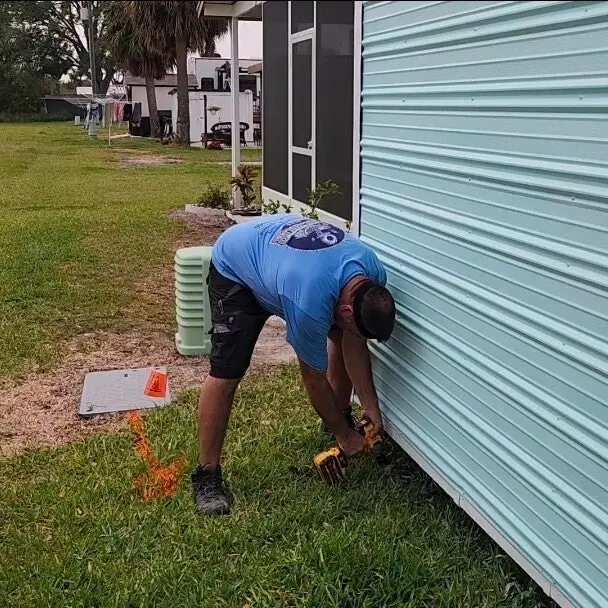
Manufactured home supports can shift differently from one property to another. Some homes develop a gradual slope across a larger area, while others show isolated movement around particular support points.
A limited section may drop enough to affect one room, doorway, or stretch of flooring without creating obvious symptoms throughout the rest of the home.
Movement across several support locations can create a longer, more noticeable change in floor elevation from one side of the structure to another.
Mobile home re-leveling service may be considered when previous support positions no longer keep the structure sitting evenly and controlled adjustment is needed.
Support correction needs to happen carefully because one adjustment can influence nearby areas of the structure. Anchormen bases the work on observed floor conditions and the support arrangement beneath the home rather than treating every property the same way.
Floor slope, door behavior, visible alignment changes, and the areas where movement is most noticeable are identified first.
Piers, blocks, shims, and accessible support points are examined to understand how the home is currently bearing weight.
Measurements and observed elevation differences help determine where correction may be needed and how the imbalance is distributed.
Jacks, shims, or support changes are used as appropriate to address the identified settling rather than raising unrelated sections unnecessarily.
Floor conditions, door operation, and adjusted support areas are reviewed again after the leveling work is completed.
The cost of a manufactured home leveling service depends on how much of the support system needs attention and how accessible the affected areas are. A small correction at one section can differ considerably from widespread settling across several support points.
A support assessment gives mobile home leveling contractors a clearer basis for defining the work than relying on symptoms alone.
A level structure and a secured structure are related concerns, but they are not the same service. Leveling focuses on how evenly the home rests on its supports, while mobile home tie-down systems address how the structure is secured against movement.
Because both systems exist beneath or around the home, Anchormen can discuss leveling alongside mobile home tie-down repair when separate support and anchoring concerns are present. Broader general building services can also be considered when the property needs work beyond the support system.
Changes that seem minor inside can be useful clues about what is happening below the structure. An anchor man can evaluate uneven areas and discuss whether support adjustment or releveling fits the condition being observed.
Specific observations can make the initial evaluation more useful. Homeowners do not need to diagnose the support system themselves, but identifying where changes are most noticeable provides a practical starting point.
These details give a mobile home leveling company useful context before the support system is examined beneath the structure.
Manufactured homes across the surrounding region can develop different settling patterns depending on support conditions and how the structure has changed over time. Anchormen works with homeowners who need leveling concerns evaluated and corrected where appropriate.
Property owners looking for residential remodeling contractors in Tampa can also discuss mobile home leveling, anchoring, tie-down repair, and other residential construction needs with Anchormen.
Support work calls for careful observation and controlled adjustment rather than guesswork. More than 30 years of general contracting experience supports the residential construction work completed by Anchormen for manufactured home projects where floor position, support points, and structural alignment need to be considered together.
Questions about trailer home leveling often come from symptoms homeowners notice inside before they ever look beneath the structure. These answers cover several common concerns about settling, support adjustment, and manufactured home releveling.
Sloping floors, doors that begin sticking, uneven room transitions, and noticeable dips can all suggest that support conditions have changed. These signs do not confirm the cause by themselves, so the home and its supports should be evaluated before deciding what adjustment is appropriate.
Changes can develop when support points settle or shift differently beneath the structure. Soil conditions, support placement, and changes around individual piers or blocks may all influence how evenly the home sits over time.
No. Manufactured home leveling does not automatically require replacement of every pier or support component. The work depends on which areas are uneven and what is found beneath the home during evaluation. Some projects involve focused adjustments rather than rebuilding the entire support arrangement.
It may help when door alignment has changed because the structure is no longer sitting evenly. A sticking door can also have other causes, so its behavior should be considered alongside floor slope and other signs before assuming leveling will resolve it.
No. Leveling addresses how the manufactured home rests on piers, blocks, and related supports. Tie-down repair concerns the anchoring system that secures the home. A property can need one service, both services, or neither depending on the condition found.
Tell us what you want to change. No obligation.