
FIX THE FAILED CONNECTION
One failed strap does not tell you what the rest of the anchoring system needs. Anchormen handles mobile home tie-down repair in Palmetto, FL by first tracing the damaged connection.
A corroded strap can be the obvious problem while the ground anchor beneath it remains usable. In that situation, mobile home strap repair or replacement can stay focused on the damaged restraint point instead of automatically turning into a full re-anchor.
The reverse can happen too. A strap may still look intact while the anchor, connector, tensioning hardware, or another part of the connection has deteriorated. Mobile home anchor repair starts by finding where the existing restraint point actually stops working as intended.
Previous work can make that diagnosis less obvious. Replacement straps, mixed hardware, altered skirting, decks, concrete, or earlier repairs may leave neighboring tie-downs in different conditions. Manufactured home tie-down repair should identify the failure point before deciding how far the correction needs to extend.
Tie-down problems don’t always start with the same component. The location and type of damage help separate a focused repair from a wider problem affecting the existing restraint system.
The visible symptom does not automatically define the repair. The strap, anchor, hardware, access, and neighboring tie-downs may all need consideration before deciding what to keep and what to replace.
A repair can stop at one component or continue through several parts of the same restraint point. The work should follow the actual failure rather than applying the same replacement approach to every tie-down that looks damaged.
You can remove and replace a damaged restraint strap when the surrounding anchor, attachment point, and connection hardware remain suitable for continued use.
Existing anchor hardware or accessible components may need correction when the problem is concentrated at the ground connection rather than the strap.
Mobile home anchor replacement becomes relevant when the existing ground anchor can no longer remain part of the repaired restraint point.
Missing, damaged, or incomplete hardware between the manufactured home, strap, and anchor can require focused connection work.
Compare nearby tie-downs with the repaired location so one visible fix isn’t mistaken for proof that every surrounding point is sound.
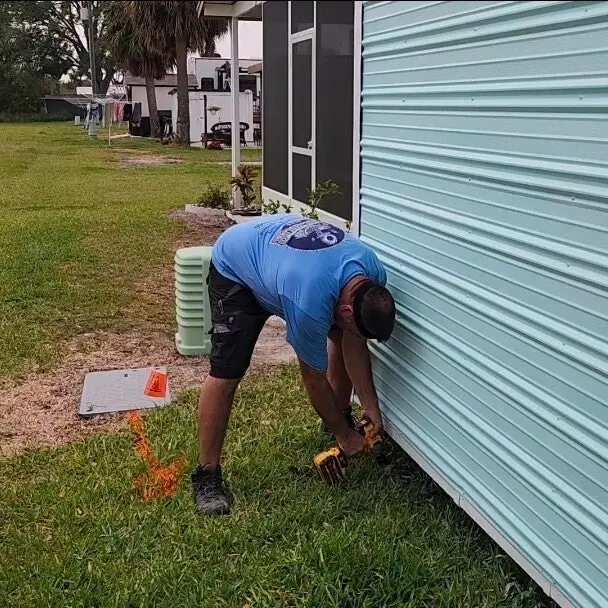
A failed component does not automatically determine the final work scope. One property may need a single mobile home anchor strap replacement, while another reveals several related conditions once the damaged restraint point is opened and evaluated.
One identifiable failed component with serviceable surrounding connections may keep the work limited to a specific tie-down point.
A strap, anchor, or connector may require complete replacement while other parts of the existing restraint system remain in place.
Several damaged points, missing connections, repeated previous repairs, or broader deterioration can move the work beyond one isolated tie-down repair.
Tie-down system repair should move from the identified fault to a completed restraint point. Anchormen follow the condition found on site instead of replacing unrelated components simply because they belong to the same system.
Identify whether the problem involves the strap, anchor, connector, tensioning hardware, frame attachment, or several parts of the same restraint point.
Gain workable access around skirting, stairs, decks, utilities, concrete, or other construction affecting the damaged connection.
Take out the strap, anchor hardware, connector, or other component that can no longer remain in the repaired assembly.
Install the required replacement strap, anchor, hardware, or connection component needed to restore the affected restraint point.
Compare the repaired point with accessible neighboring connections, and check for related deterioration nearby.
Tie-down repair cost depends heavily on which component failed and how you can reach it. An accessible damaged strap creates a very different repair from a ground anchor located behind concrete, skirting, stairs, or other construction.
The most useful estimate starts with the actual failed connection. Counting anchors around the home does not show which parts remain usable or how much work the damaged restraint point requires.
Tie-down repair deals with an existing restraint system that already has anchors, straps, or connection hardware in place. The purpose is to identify the failed point and restore that connection where a focused repair remains appropriate.
A broader mobile home anchoring and tie-down installation project is different. New anchoring may become relevant when restraint points are missing, several locations require replacement, or the existing setup no longer provides a practical basis for isolated repair.
Leveling addresses another physical issue entirely. It concerns how the manufactured home sits on its supports, while anchoring repair deals with restraint connections. One should not be treated as an automatic substitute for the other.
One damaged component is enough reason to investigate the restraint point, but not enough information to assume everything needs replacement. Anchormen can identify the fault and define where the repair should stop.
The original condition can provide useful clues once repair work begins. Homeowners can document the damaged area without tightening straps, repositioning hardware, or removing anything themselves.
These observations can make a mobile home tie-down inspection more focused while preserving the condition that existed before repair work begins.
Anchormen provides mobile home anchoring repair throughout Palmetto and nearby service areas when existing straps, anchors, hardware, or restraint connections are damaged or need replacement.
Repair conditions can vary substantially between properties because system age, previous work, access, and component condition are rarely identical from one manufactured home to another.
A completed repair should directly address the identified fault. The homeowner should understand what condition existed before the work and what changed at that restraint point.
Anchormen brings more than 30 years of general contracting and service-industry experience to residential projects. Military and senior citizen discounts are also available.
Tie-down repair decisions usually come down to identifying the failed component, determining what can remain, and separating a localized repair from a wider anchoring issue.
It may be possible when the damage is limited to the strap and the existing anchor, connection hardware, and surrounding restraint point remain suitable for continued use. Don’t automatically replace the anchor just because the strap failed; you still need to assess its condition.
Visible strap corrosion, bending, or physical damage may point toward strap replacement, while movement or deterioration at the ground connection can shift attention toward the anchor. Sometimes the connector between them is the weak point, so the repair should follow the actual failed component.
That depends on where the corrosion is located and how much deterioration is present. A damaged strap, connector, anchor head, or other component may need replacement when it can no longer remain part of the restraint point. Surface discoloration alone does not require a repair.
One loose connection may be isolated, but tightening it without determining why it lost tension can miss the underlying issue. Consider the strap, anchor, hardware, attachment, and nearby restraint points before deciding whether to adjust, repair, or replace a component.
“Hurricane strap” is sometimes used broadly for restraint hardware, but manufactured homes can use specific straps, anchors, connectors, and attachment components. Identify the installed part first so replacement work matches the actual tie-down system, rather than relying on informal terminology.
Tell us what you want to change. No obligation.