
FRAME TO GROUND, CONNECTED
A mobile home is restrained through a chain of connections from frame to ground. Anchormen provides mobile home tie-down installation in Palmetto, FL, around that complete restraint path.
Mobile home anchoring begins at the structure, not at the anchor head visible near the ground. A tie-down connection must transfer restraint from the manufactured home frame through approved hardware to the anchor embedded below the surface.
Follow that path downward, and each handoff matters. The frame connection leads into the tie-down strap or other restraint hardware. That connection reaches the ground anchor, which depends on the surrounding soil and the installation conditions at that location.
Existing systems add another layer. Corrosion, previous repairs, altered skirting, grade changes, decks, utilities, or replaced hardware can leave different tie-down points in very different conditions. Manufactured home anchoring should therefore be evaluated as a system rather than assuming every visible anchor needs the same work.
A tie-down system does not have one universal failure sign. Some concerns show up at the strap; others appear at the connection, anchor head, or surrounding site. Identifying where the condition occurs helps define what actually needs attention.
One visible problem does not automatically determine how much work is required. Mobile home tie-down contractors must consider the affected connection and surrounding restraint points before deciding whether to adjust, replace hardware, or add new anchors.
The anchoring system works through a series of physical connections. Looking at those handoff points helps distinguish the structure being restrained from the hardware carrying that restraint into the ground.
The restraint begins at an appropriate structural connection on the manufactured home. The anchor in the ground is only useful when the connection reaches back to the home correctly.
Tie-down straps carry the connection away from the frame. Their condition, routing, attachment, and relationship to surrounding hardware all matter to the completed restraint point.
The strap or connection hardware meets the anchor head near ground level. Corrosion, damage, poor access, or previous alterations may also become visible here.
Ground anchor installation extends the restraint below the surface. Anchor selection and installation have to account for the applicable system, site conditions, and installation requirements.
Mobile home tie-down systems rely on multiple restraint points working around the structure. Don’t view one anchor as representative of the entire setup.
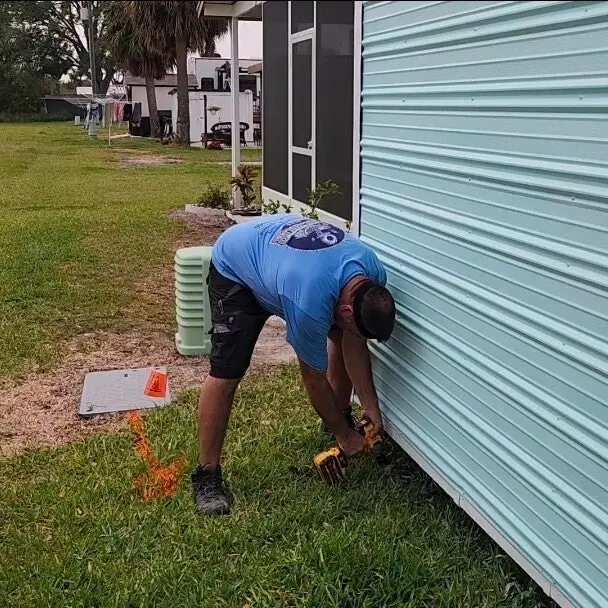
Anchor work on an occupied property often begins with equipment that has already been in place for years. The useful question is not simply whether anchors exist. It is whether the existing system still provides usable connections and where later property changes have affected it.
Earlier mobile home anchor installation may include aged straps, corroded components, replacement hardware, or tie-down points completed at different times. Existing work needs to be reviewed before adding more.
Skirting, decks, mobility ramps, utility work, concrete, grading, and other property changes can alter access to original anchor locations or affect where new work can reasonably occur.
A damaged strap or anchor doesn’t automatically mean you must replace every tie-down around the home. Evaluate the affected point and nearby connections together before deciding what to replace.
Mobile home anchoring services should follow the condition of the home already on site. Anchormen move from the visible existing setup to defined correction points, then complete the required connections and review the finished restraint path.
Review visible mobile home anchors, straps, frame connections, hardware condition, access limitations, and signs of previous anchoring work.
Identify damaged, missing, incomplete, deteriorated, or otherwise affected locations and separate them from existing components that remain part of the system.
Plan required ground anchor installation around structural connection points, existing site conditions, utilities, skirting, access, and nearby construction.
Install or replace the required anchors, tie-downs, and connection hardware so the completed restraint points extend between the manufactured home and the ground.
Recheck completed connections, visible hardware, accessible anchor points, and the relationship between the corrected work and the surrounding tie-down system.
The amount of anchoring work depends heavily on what is already installed. A home with accessible anchors and isolated damaged hardware presents a different project from one with missing connections, widespread deterioration, altered access, or several restraint points requiring new work.
That is why mobile home anchoring is better defined after reviewing the existing system. Counting visible anchors alone does not show how many connections can remain, how many need correction, or where new work belongs.
Anchoring restrains the manufactured home through connections between the structure and the ground. Leveling deals with how the home sits on its support system. Those are related parts of the setup, but they do not correct the same physical condition.
A home that is out of level does not become level simply because new anchors are installed. Similarly, leveling does not automatically correct missing, damaged, or deteriorated tie-down connections.
When support position is the concern, homeowners can compare anchoring work with mobile home leveling services rather than assuming one service substitutes for the other.
Seeing metal anchor heads around the perimeter doesn’t confirm what is connected to them or the condition of the rest of the restraint path. Anchormen can review visible mobile home tie-downs and identify where the existing setup needs further work.
Homeowners can gather useful information without tightening straps, moving hardware, or adjusting ground anchors. A simple visual walk around the home can make the service conversation more specific.
Leave tensioning, anchor adjustment, and connection changes to the people performing the anchoring work. Observation helps identify where a closer look may be needed without changing the existing setup.
Anchormen provides mobile home anchoring and tie-down work from Palmetto across surrounding service areas where manufactured homes may have existing systems, replacement needs, or altered perimeter conditions.
The physical setup can differ from property to property, so mobile home anchoring services should be based on the home, existing restraint system, and site rather than applying one repair assumption everywhere.
Completed anchoring work should make the restraint path easier to understand, not leave homeowners guessing which parts were corrected or where the connection ends.
For Anchormen, good tile work comes down to how the finished floor reads as a whole. Balanced cuts, consistent joints, clean transitions, and controlled edges should all support the room rather than compete with it.
Mobile home anchoring questions usually become clearer once you treat the anchor, strap, frame connection, and support system as separate parts of the property, not one interchangeable component.
Visible corrosion, bent hardware, damaged straps, missing connections, loosened components, or previous property changes can justify a closer review. Base replacement on the condition of the affected restraint points and surrounding system, rather than assuming every existing anchor needs to come out.
No. The ground anchor is the component installed into the ground, while the tie-down strap or related restraint hardware connects the manufactured home to that anchor. They work together, so a good anchor does not help if the connection back to the home is incomplete.
Potentially. A single damaged strap, connector, or anchor does not automatically determine the condition of every restraint point around the home. Review the damaged location, nearby hardware, existing anchor layout, and overall setup before deciding how much manufactured home anchoring work is needed.
No. Leveling addresses how the home sits on its support system, while tie-downs restrain the structure through anchoring connections. A project may involve both conditions, but correcting one does not automatically resolve the other. Evaluate each system based on the job it performs.
They can affect access to existing anchors, frame locations, straps, and areas where additional work may be needed. These features don’t automatically create an anchoring problem, but you should consider their position when evaluating or planning mobile home anchor installation around an occupied property.
Tell us what you want to change. No obligation.